


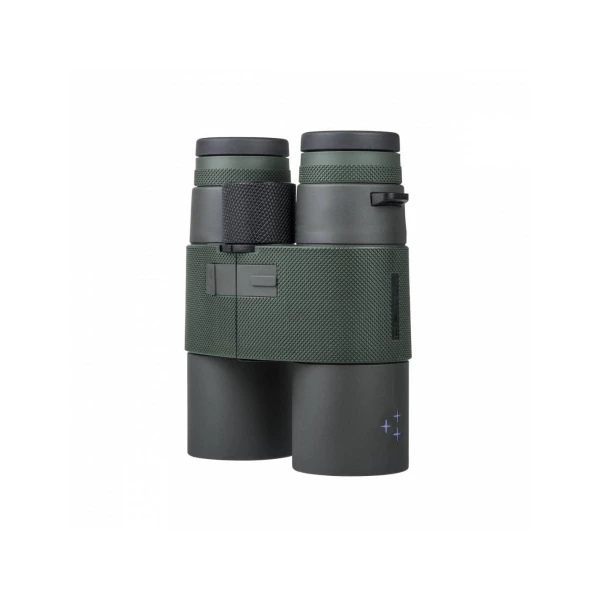
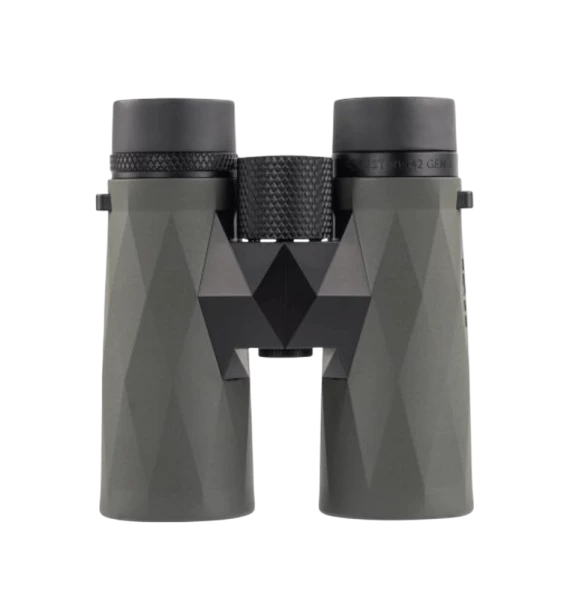


Binoculars for Hunting and Nature Observation
Are you looking for a high-quality binocular for hunting? Then you’ve come to the right place at hunting-sport.com! In our extensive range, you will find binoculars from renowned brands. Gain full visibility – with binoculars from our online shop.
Discover the Top Brands in Our Binocular Shop
At Hunting Sport, we offer high-quality binoculars known for their brilliant optics, reliable distance measurement, and easy handling. Of course, you’ll find Steiner and Swarovski binoculars in our range. Whether you value a particular brand or are looking for the best value for money, you’ll find the right model for your needs with us. Discover the best brands in our binocular shop:
- Steiner Binoculars
- Swarovski Binoculars
- Bushnell Binoculars
- Kahles Binoculars
- Delta Optical Binoculars
Key Features – Choosing the Right Model
When buying binoculars, especially for hunting, you should consider various technical aspects to find the optimal model for the intended purpose. Optical performance, ergonomics, and practical additional features like laser rangefinders or ballistic information play a key role.
Objective Lens Diameter and Light Transmission
The objective lens diameter is crucial for the light intake of binoculars. The larger the objective, the more light enters, and the brighter the image. Especially for dawn and dusk observations, models with a large objective lens diameter (e.g., 56 mm) are advantageous. However, a larger lens also means more weight. For mobile use or hiking, compact models with smaller objectives are better suited.
Magnification and Field of View
A binocular with 8x or 10x magnification is ideal for hunting as it allows stable handling. Higher magnifications, while more powerful, make it harder to hold steady without a tripod. Additionally, magnification affects the field of view: A higher magnification reduces the visible area, making it harder to track fast movements.
Exit Pupil and Twilight Performance
The exit pupil describes the diameter of the light beam that exits the eyepiece into the eye. It is calculated by dividing the objective diameter by the magnification. A binocular with 8x56 has an exit pupil of 7 mm, which is optimal for low-light conditions. As we age, the ability of the human pupil to expand decreases, so for older users, a value around 5 mm is often sufficient.
Quality Factors – Coating and Build Quality
The quality of binoculars depends not only on the technical construction but also on the coating of the lenses. High-quality models from Swarovski, Steiner, or Kahles feature multi-coated prisms and lenses that minimize reflections and enhance light transmission. Models with a transmission of over 90% offer clear views even under challenging lighting conditions.
In our range, you’ll find binoculars with Porro prisms and roof prism systems. The offset eyepieces and objective lenses of Porro binoculars provide a very three-dimensional view, which is an advantage in the medium range of 10 to 100 meters compared to roof prism binoculars. However, the much more compact roof prism binoculars are superior, especially at close distances. Which prism type is right for you depends, as always, on the intended use.
Weather Resistance and Additional Features
Especially hunting binoculars should be rugged and weatherproof. A nitrogen or argon filling prevents lens fogging, while special protective coatings like the lotus effect cause water to bead off. If you need additional features, models with an integrated rangefinder or ballistic calculator are available, making it easier to judge game distances accurately.
Special Features for Different Uses
Whether you want your binoculars for nature observation or hunting, or if you are looking for a binocular with a rangefinder or angle correction, you’ll find it in our online shop. Depending on your use case, you should consider various features:
- Binoculars for glasses wearers: Nowadays, nearly all binoculars are suitable for glasses wearers. However, you should pay attention to an adequate eye relief to achieve an optimal image. Glasses wearers are usually recommended binoculars with a minimum eye relief of 15 mm. Adjustable eyecups make this no problem, as you can adjust the eye relief yourself. The Swarovski EL 8.5x42 is a very popular choice due to its roof prism design and particularly large eyepieces.
- Binoculars for hunting: In our online shop, you’ll naturally find top-quality binoculars that are perfect for hunting. It comes down to your preferences – do you want a wide-angle eyepiece, lightweight and compact, with high twilight performance or distance measuring? Find your binoculars at Hunting Sport and maintain the optimal overview on the stand, while stalking, or during your rounds.
- Binoculars for bird watching: For bird watching, compact pocket-sized binoculars like the Kahles Helia RF 8x42 are ideal.
- Binoculars for children: To introduce your children to nature early, you can also purchase binoculars specifically for kids. However, some standard binoculars are also suitable for children. You should ensure that the binoculars are lightweight and easy to use.
Buy Binoculars Online at Hunting Sport: Your Benefits at a Glance
At Hunting Sport, we offer not only high-quality binoculars for hunting, hiking, or bird watching, but also a wide range of sports shooting accessories and hunting gear like thermal and night vision devices, ammunition, as well as everything you need for reloading and much more. Our large selection of high-quality binoculars from leading brands ensures that you will find the right model for your needs and intended purpose. Take advantage of the benefits of our online shop, including fair pricing and fast order processing.
FAQ - Further Information
What do the numbers 8x42, 10x42, or 12x56 mean on a pair of binoculars?
Numbers like 8x42, 10x42, or 12x56 on binoculars describe two important optical features: magnification and objective lens diameter. The first number (e.g., 8, 10, or 12) represents the magnification. An 8x42 binocular magnifies the image eight times, a 10x42 magnifies it ten times, and so on. The higher the magnification, the closer the object appears, but the image can also become more susceptible to shake. The second number (e.g., 42 or 56) indicates the diameter of the objective lenses in millimeters. A larger objective (e.g., 56 mm) collects more light and provides a brighter image, especially in low-light conditions.
What are the objective lens and eyepiece on binoculars?
The objective lens is the front lens of the binoculars that captures light and creates the image. The larger the objective diameter, the more light enters the binoculars, which is particularly advantageous in low-light conditions. The eyepiece is the lens through which you view the image. It magnifies the image and provides a sharp view. Adjustable eyepieces allow for customization of the eye relief, which is especially important for glasses wearers.
What does the prism do?
The prism in binoculars is an optical component that corrects and enlarges the incoming image. Without prisms, the image would be upside down. There are two common types of prisms: roof prisms, which allow for a compact design, and Porro prisms, which offer better depth perception and light transmission. The choice of prism affects the design, weight, and image quality of the binoculars.
What is the purpose of the central focusing wheel?
The central focusing wheel is the main focusing mechanism of binoculars and is used to adjust both barrels simultaneously for sharpness. By turning the central focusing wheel, you can quickly and precisely adjust the focus to different distances. This is particularly important for hunting or nature observation, where a smooth and precise focusing wheel allows you to respond to changing distances swiftly.
How do I properly adjust binoculars?
To properly adjust binoculars, start with the eye relief by adjusting the barrels so that a clear, circular field of view is visible. Then, adjust the central focusing wheel to focus the left eye by selecting an object at a medium distance. Next, use the diopter adjustment on the right eyepiece to focus the right eye separately. After this, sharpness for both eyes can only be fine-tuned using the central focusing wheel. This ensures an optimal, sharp image.

