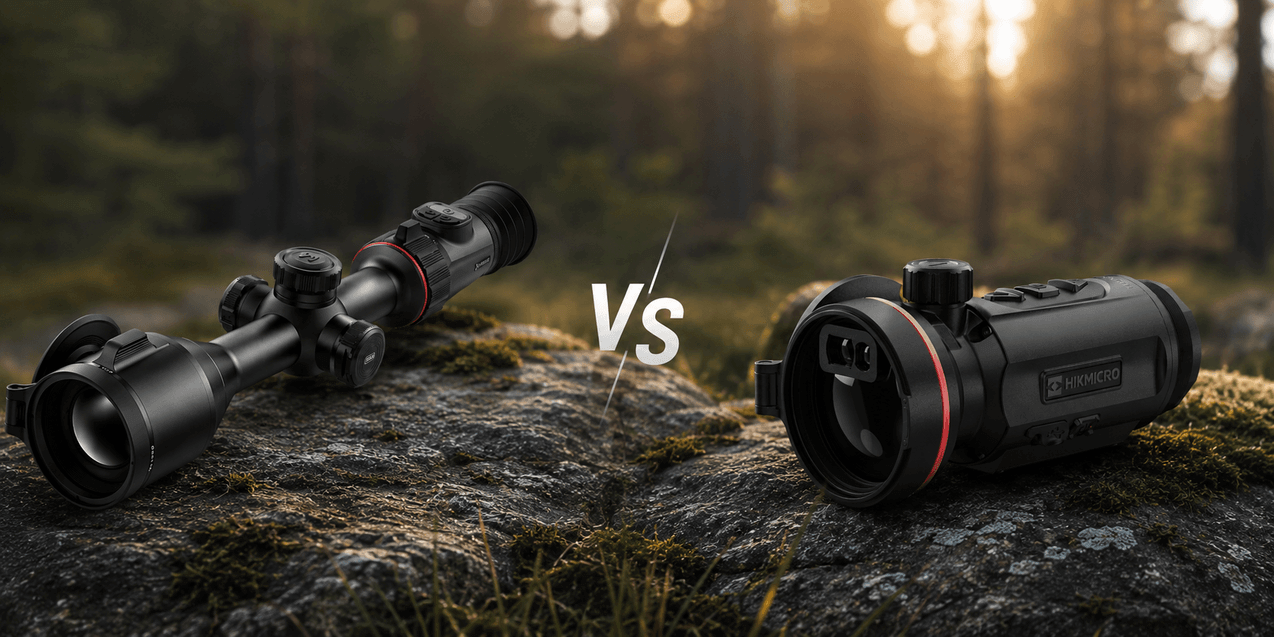
Is a thermal scope a practical alternative to a thermal clip-on? This is a question many hunters ask themselves once night-time wild boar hunting becomes a more regular part of their routine. When hunting from a stand, it quickly becomes clear that sensor resolution and detection range are not the only factors that determine how well a thermal imaging device suits your hunting needs. The rifle, the existing riflescope and your usual hunting routine also play an important role.
Hunters who use the same rifle for roe deer during the day and wild boar at night have different requirements from those who want to set up a rifle specifically for night hunting. This is where the key differences between the two systems become apparent.
In this guide, we compare thermal scopes and thermal clip-ons from a hunter's perspective. We explain the strengths of each system, what matters when it comes to technology, mounting and point of impact, and which system is best suited to different types of hunting.
Direct Comparison
The main difference lies in the design. A thermal scope serves as the complete sighting system. With a thermal clip-on, the existing riflescope remains mounted on the rifle and is supplemented by thermal imaging technology.
|
Criterion |
Thermal Scope |
Thermal Clip-On |
|---|---|---|
|
Basic principle |
Standalone sighting system with thermal sensor and digital reticle |
Mounted in front of a conventional riflescope |
|
Riflescope required? |
No |
Yes |
|
Flexibility |
Usually dedicated to one rifle |
Can be used on several rifles with the appropriate mounting system |
|
Operation |
Direct and straightforward, without additional riflescope magnification |
Depends on the riflescope, adapter and magnification |
|
Point of impact |
Zeroed like a conventional riflescope |
Must be checked with the respective rifle and optic |
|
Key advantage |
Integrated system combining sensor, display, reticle and ballistic functions |
High flexibility while retaining the familiar riflescope |
|
Typical use |
Dedicated night-hunting rifle, hunting abroad, specialised wild boar hunting |
Stand hunting, bait sites, different rifles and versatile hunting use |
What Is a Thermal Scope?
A thermal scope, also known as a thermal riflescope, is a standalone digital sighting system. It is mounted directly on the rifle and replaces the conventional riflescope. The thermal sensor, objective lens, display and reticle are all integrated into a single device.
The sensor detects thermal radiation emitted by game, vegetation and the surrounding environment. These temperature differences are converted into an image on the internal display. This makes it possible to detect game even in darkness, when there would be very little to see through a conventional riflescope.
This concept is particularly interesting for a dedicated night-hunting rifle. The device remains mounted, the reticle settings are stored in the system and there is no need to fit an additional clip-on before heading out.
You can find suitable models in our thermal scopes category. Particularly popular models include:



- HIKMICRO Stellar 3.0 SH35
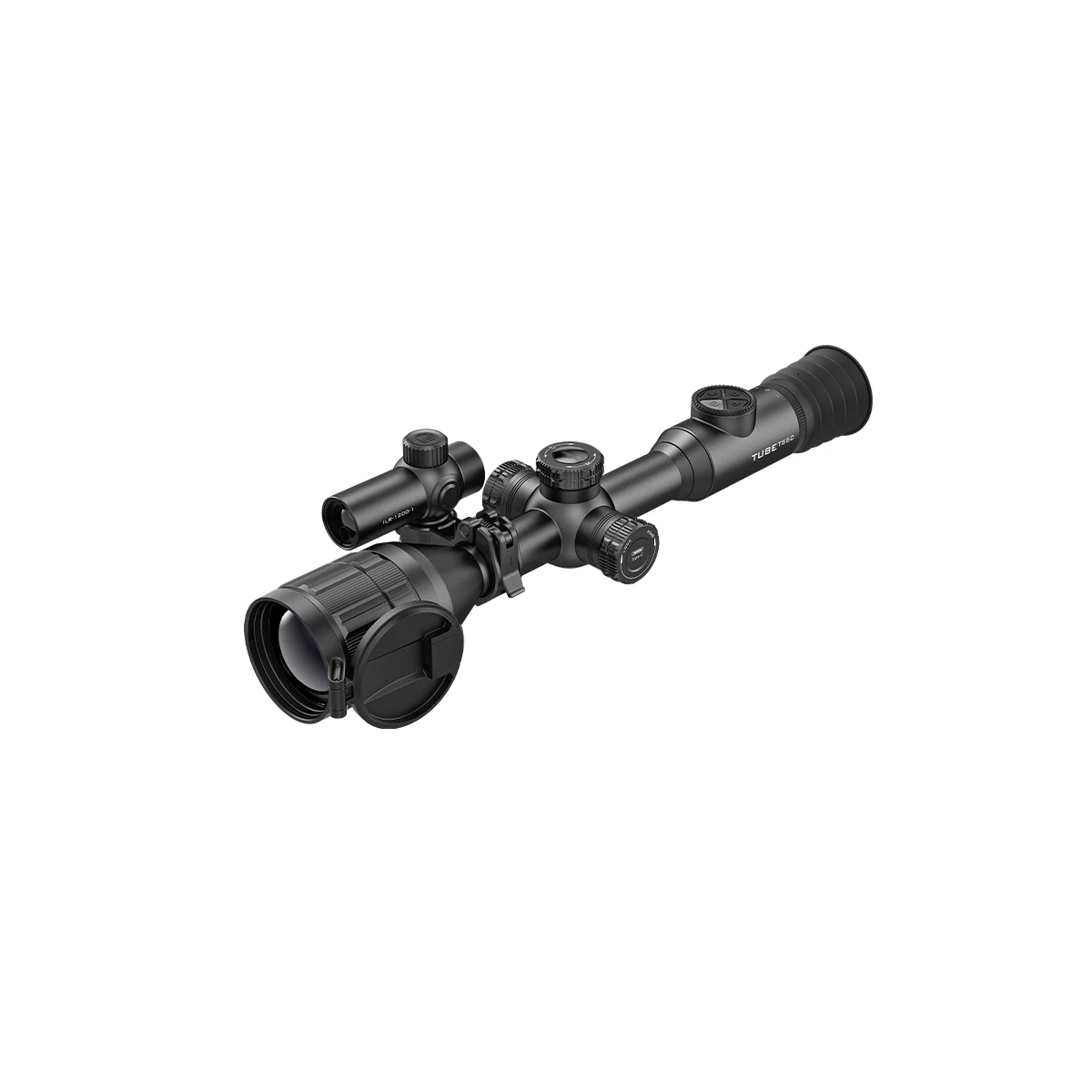
- InfiRay Tube TS60 Thermal Scope
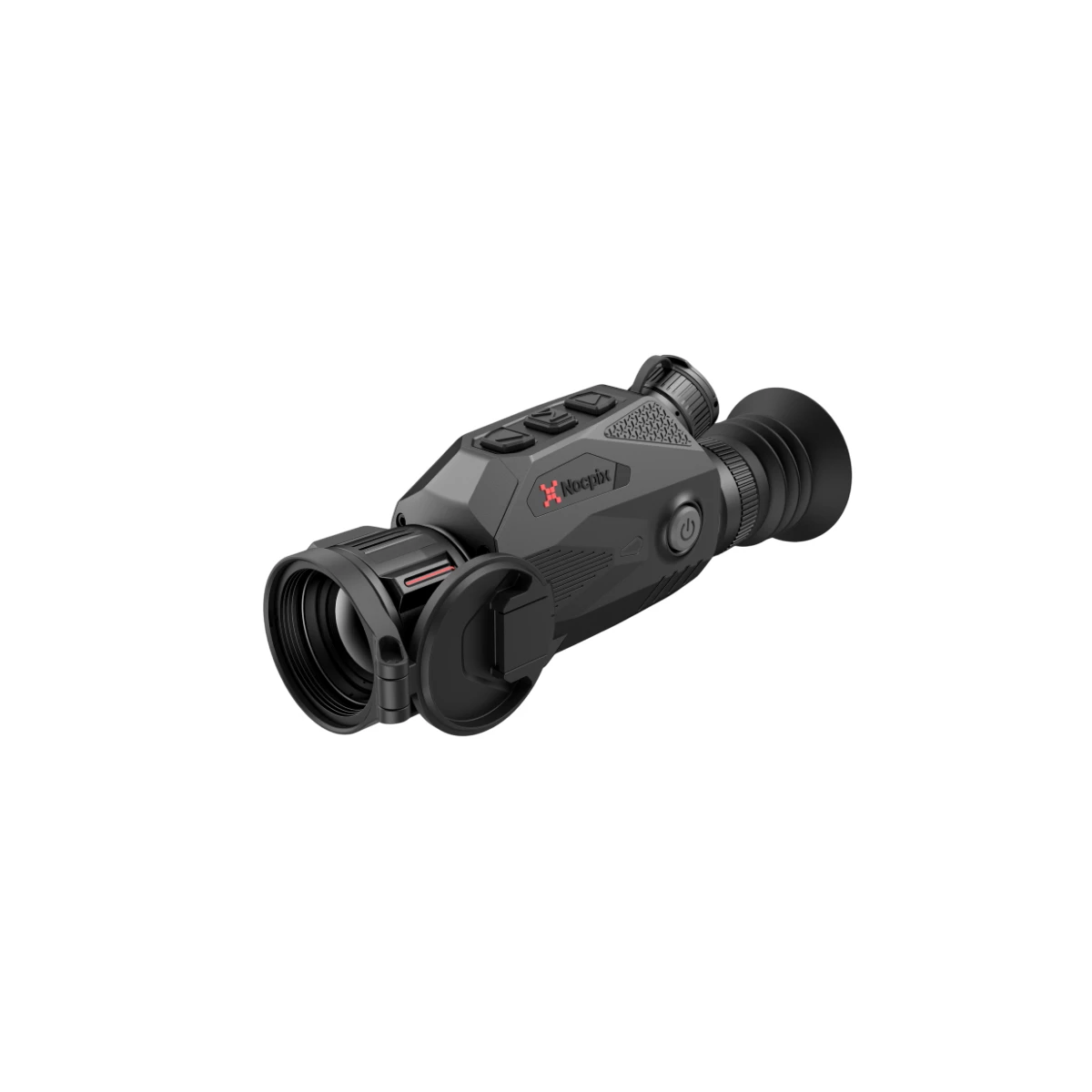
- Nocpix ACE H50 Thermal Scope
- Therm Tec ARES 660
The Strength of an Integrated System
The practical advantage of a thermal scope is not necessarily that it produces a better image. The key benefit is its straightforward setup. There is no additional clamp adapter and no conventional riflescope between the eye and the thermal imaging device.
The reticle, digital magnification and, depending on the model, additional functions such as a laser rangefinder or ballistic programs are integrated directly into the thermal optic. Hunters who regularly use the same rifle for night hunting can therefore create a very streamlined setup.
How Does a Thermal Clip-On Work?
A thermal clip-on is mounted in front of the existing riflescope. The riflescope remains on the rifle, allowing you to retain its reticle, magnification, eye relief and familiar operation.
The clip-on provides the thermal image. The hunter continues to look through the riflescope and uses its reticle. This makes the quality of the daytime riflescope important. In practice, a bright, clear scope with suitable base magnification is generally more comfortable to use than a scope with very high magnification.
You can find suitable devices in our thermal clip-on devices category. These include:
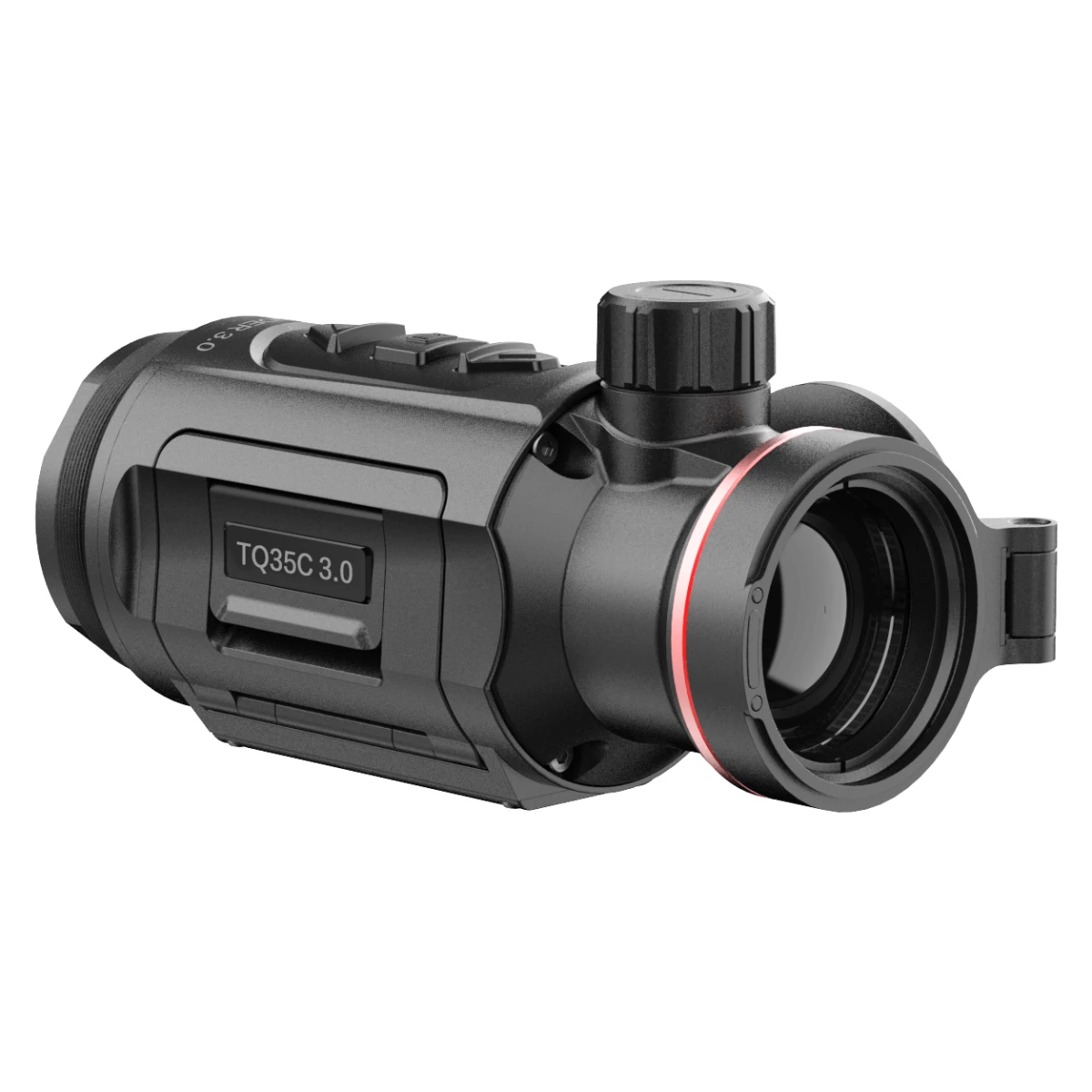

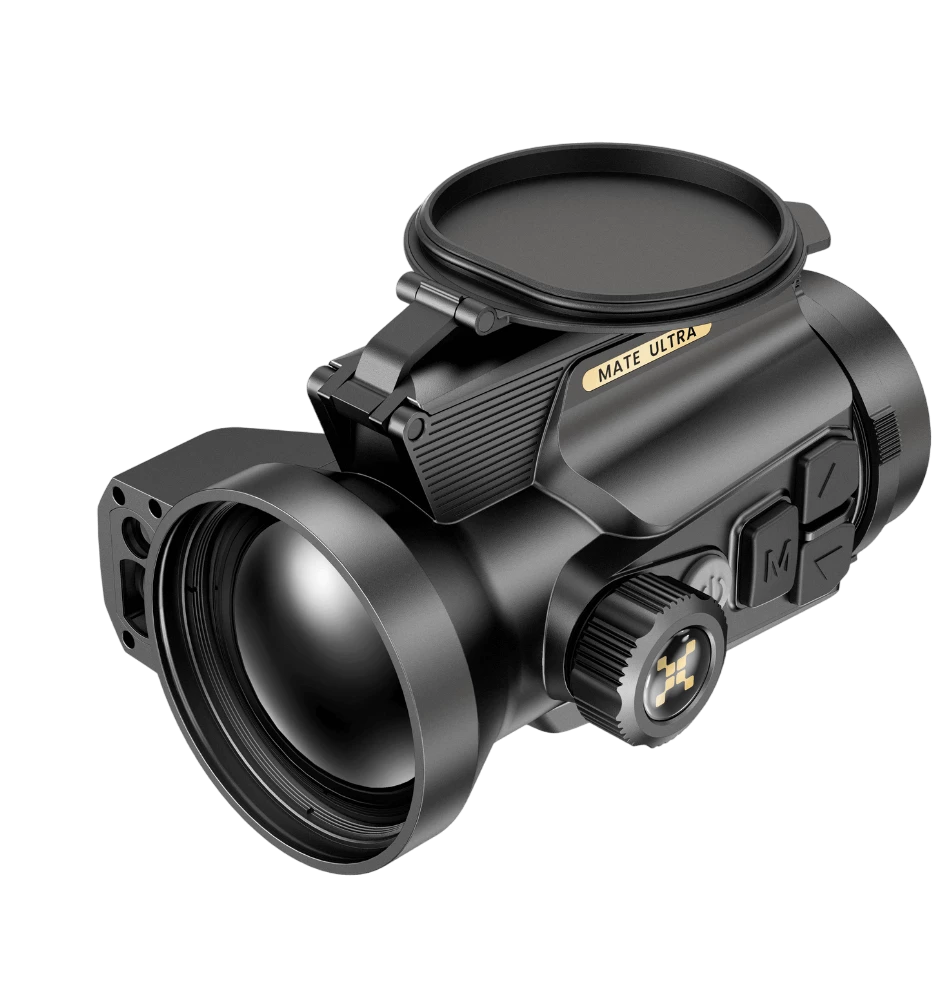
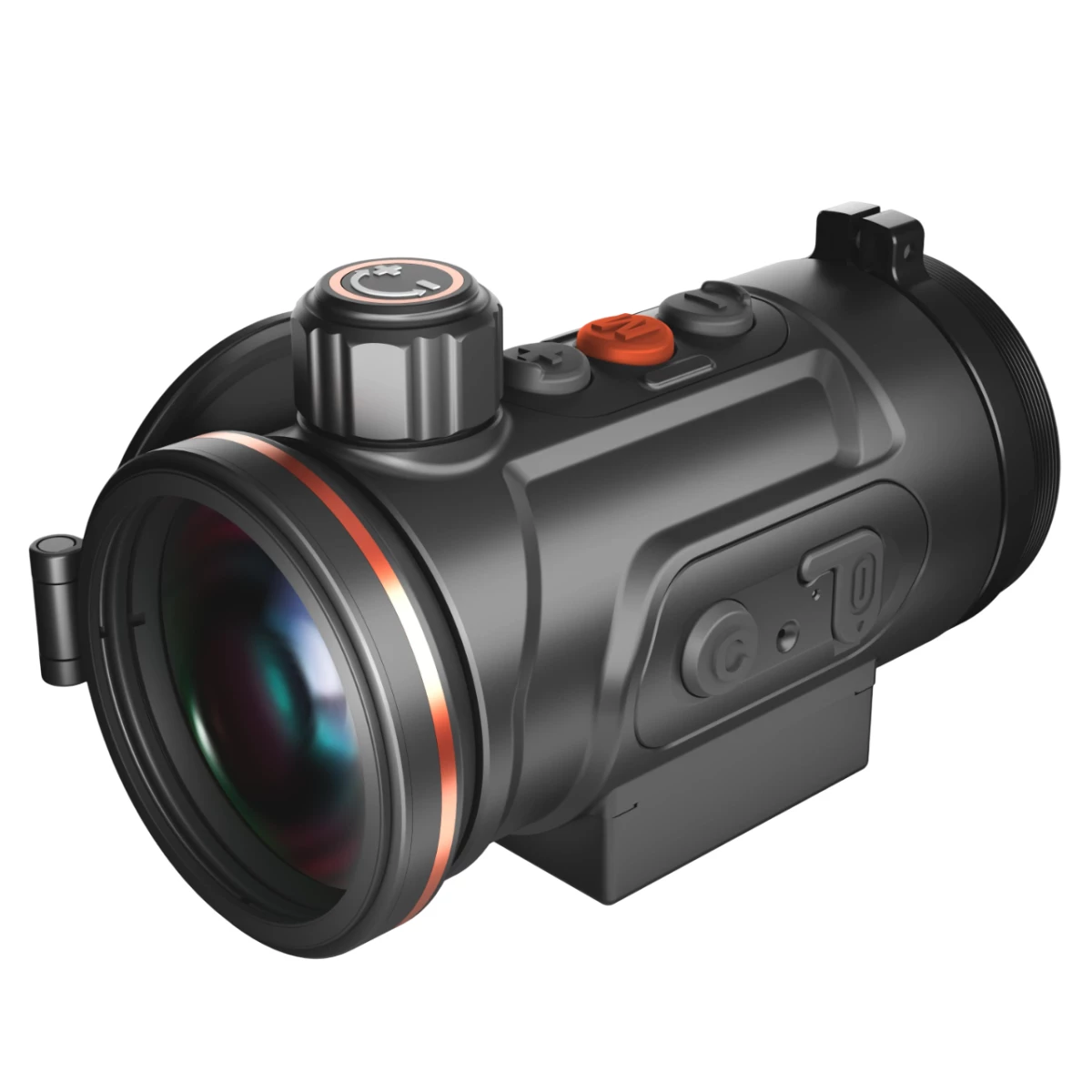
- HIKMICRO Thunder TQ35C 3.0 Thermal Clip-On
- Nocpix MATE LITE
- Nocpix MATE ULTRA
- Therm Tec Hunt 650 Pro Thermal Clip-On
When Does a Thermal Clip-On Make Sense?
A clip-on is particularly useful if you want to continue using your existing rifle and familiar riflescope. Understandably, many hunters do not want to purchase a separate thermal sight for every rifle. With a suitable adapter, a clip-on can be used on several rifles, depending on the setup.
Advantages and Disadvantages of Thermal Scopes and Clip-On Devices
Which System Is Best Suited to Which Type of Hunting?

Wild Boar Hunting from a Stand
For regular wild boar hunting from a stand, both systems can be a good choice. Hunters who use their rifle almost exclusively for night hunting can set it up permanently with a thermal scope. Switch it on, check the image and diopter setting, and the rifle is ready for use.
If the same rifle is used for roe deer in the afternoon and wild boar later in the evening, a clip-on device is the more practical option. The conventional riflescope remains on the rifle and thermal imaging technology is added only when needed.
Stalking
When stalking, the additional weight becomes more noticeable. A clip-on mounted in front of an already heavy riflescope can significantly alter the balance of the rifle. Hunters who cover longer distances or frequently shoot offhand or from shooting sticks should therefore consider the weight of the complete setup.
When stalking, many hunters combine a thermal monocular for handheld observation with a clip-on device or thermal scope for taking the shot. This avoids unnecessary sweeping with the rifle and improves safety.
Which Technical Specifications Really Matter?
For hunting, devices with 384x288 pixels offer a solid entry-level option. 640x512 pixels or comparable sensor resolutions generally provide more image detail, a wider field of view or greater performance reserves in challenging conditions.
Magnification with a Clip-On Device
When using a thermal clip-on, the magnification of the riflescope must also be taken into account. As magnification is increased, the riflescope ultimately magnifies the display image of the clip-on as well. This makes the pixels more visible and reduces the usable field of view. With most devices, a magnification range of 2x to 6x works very well. Modern high-performance models can even remain usable at up to 10x magnification.
This is why one of the key questions in our consultations is which riflescope is already mounted on the rifle. A clip-on should always be considered together with the existing optic rather than being purchased solely on the basis of its technical specifications.
Laser Rangefinder
An integrated laser rangefinder is particularly useful in open terrain. At night, many of the visual reference points used to estimate distances during the day are missing. An accurately measured distance therefore provides an additional level of confidence.
At a bait site with known distances, a rangefinder is less important. Hunters who frequently hunt along field edges or across changing open areas, however, will make considerably more use of it.
Mounting, Zeroing and Point of Impact
Zeroing a Thermal Scope
A thermal scope is mounted directly on the rifle and adjusted to the rifle's point of impact like any other sighting optic. Many devices can store several rifle profiles or different ammunition loads.
Targets that stand out clearly from the background in the thermal image are ideal for zeroing. A controlled shot group should then be used to verify the result. Digital adjustment may be convenient, but it does not replace verification at the shooting range.
With a Clip-On, the Adapter Matters Too
With a clip-on device, the adapter plays a particularly important role. It must match the outside diameter of the riflescope, fit securely without any play and position the device reproducibly in exactly the same place.
After the initial installation, the point of impact should always be checked. A manufacturer's claim of high repeatability is no reason to skip a confirmation shot. The same applies when switching to a different rifle or riflescope.
💡 Practical Tip from Hunting Sport
Practise attaching and removing a new clip-on device before using it for the first time at night. Also check the focus, button layout, battery and required riflescope magnification. In the dark, you should not have to work out which button changes the image mode or how to close the adapter correctly.
Legal Situation in Germany – Thermal Scopes and Clip-On Devices
As of August 2026, German firearms law and hunting law must be considered separately. This is particularly important because the same exemption under firearms law does not apply to thermal clip-on devices and standalone thermal scopes mounted directly on a firearm.
Thermal Clip-On Devices Under German Firearms Law
Section 40(3) of the German Weapons Act allows holders of a valid hunting licence, for hunting purposes, to handle the night-vision front attachments and add-on devices specified there. Under the current legal situation, this also includes corresponding thermal clip-on devices without a prohibited target-illumination device.
However, this does not automatically mean that such a device may be used for hunting everywhere in Germany. The German Weapons Act expressly states that hunting-law prohibitions and restrictions remain unaffected.
Thermal Scopes Are Generally Prohibited in Germany
A standalone thermal scope is itself the complete sighting optic, as it has its own digital reticle and is mounted directly on the firearm. Under German firearms law, these devices are generally classified as prohibited night-vision sights. The exemption for hunting licence holders under Section 40(3) of the German Weapons Act applies only to night-vision front attachments and add-on devices, not to standalone thermal scopes.
State Hunting Laws Also Apply
Even when a thermal clip-on device is permitted under firearms law, hunters must check what the hunting regulations of the respective German federal state allow before using it. The rules may differ, particularly with regard to permitted game species and the conditions governing night hunting.
If you are unsure, check the current regulations in the relevant federal state before hunting or contact the responsible hunting authority or state hunting association.
Cost Comparison – Which Device Is More Affordable in the Long Run?
Simply comparing the prices of the devices does not tell the whole story. With a clip-on device, the adapter or clamping sleeve and the existing riflescope must also be taken into account. A thermal scope, on the other hand, requires a suitable firearm mount, which depending on the system can be considerably more expensive than a clip-on adapter.
|
Cost Item |
Thermal Scope |
Thermal Clip-On |
|---|---|---|
|
Thermal Imaging Device |
Required |
Required |
|
Riflescope |
Not required |
Existing riflescope is used |
|
Mount / Adapter |
Suitable firearm mount required, often around €350–400 depending on the system |
Adapter usually around €200–250 |
|
Day and Night Hunting |
A separate daytime optic or second rifle may be useful |
Riflescope remains usable during the day |
|
Use on Multiple Rifles |
With a compatible mounting system, the same optic can be used with a second rifle profile |
For another rifle or optic, only an additional suitable clamping sleeve or adapter is usually required |
If you already own a good riflescope, a clip-on device is often the more affordable option. Additional adapters or clamping sleeves for other rifles are usually considerably cheaper than a complete firearm mount. With a thermal scope, the mount generally remains attached to the device. If the same optic is to be used on a second rifle with a compatible mounting system, many devices allow an additional rifle profile to be stored.
Decision Guide by Application
|
Your Situation |
Better Suited |
|---|---|
|
I want to keep my existing riflescope. |
Thermal Clip-On |
|
I use the same rifle during the day and at night. |
Thermal Clip-On |
|
I want to use the thermal device on several rifles. |
Usually a Clip-On |
|
I am setting up a rifle permanently for night hunting. |
Thermal Scope, where legally permitted |
|
I mainly hunt at short ranges in woodland. |
Both systems, prioritise a wide field of view |
|
I often hunt across large open fields. |
Both systems, with greater emphasis on detail recognition and rangefinding |
|
Using my familiar reticle is particularly important to me. |
Thermal Clip-On |
Recommendation by Hunting Ground Type
|
Hunting Ground Type |
Recommendation |
Reason |
|---|---|---|
|
Woodland |
Clip-on or thermal scope with a wide field of view |
Short distances, fast target acquisition, little need for high magnification |
|
Open Fields |
High-performance thermal scope or premium clip-on |
Longer distances, larger areas and accurate distance estimation are more important |
|
Mixed Terrain |
Flexible clip-on device |
Adapts well to different rifles, distances and hunting situations |
|
Dedicated Wild Boar Hunting |
Thermal Scope |
A straightforward system for a dedicated night-hunting rifle |
Common Mistakes When Buying
❌ Focusing Only on Detection Range
A long detection range sounds impressive, but says little about reliable identification and accurate shot placement. Image detail, field of view, ease of operation and realistic hunting distances are what really matter.
❌ Underestimating the Importance of the Adapter
With a clip-on device, the adapter is not just a minor accessory. It must fit the riflescope precisely and return to the same position reliably.
❌ Ignoring the Existing Riflescope
A high-quality clip-on cannot compensate for every weakness of an unsuitable riflescope. Base magnification, image quality and the outside diameter of the objective all play a role.
❌ Not Checking the Point of Impact
Even with high-quality mounting systems, the point of impact should always be checked after mounting. This is especially important when a clip-on is used on different rifles.
❌ Not Checking the Legal Situation
The legal requirements for thermal imaging technology can vary depending on the country, region and intended use. Before purchasing, check what is permitted in your federal state and for your intended application.
Checklist Before Buying
- Which type of hunting is your main priority?
- Will you be using a dedicated night-hunting rifle?
- Do you want to use the device on several rifles?
- What shooting distances are realistic?
- Is a wide field of view or greater range more important?
- Is the clip-on compatible with your existing riflescope?
- Does the mounting system provide reliable repeatability?
- Have you checked the legal requirements for its use?
- Do you have a separate observation device?
- Do you need personal advice?
If you are unsure which thermal imaging device is best suited to your rifle and hunting needs, we will be happy to advise you personally.
Conclusion – Thermal Scope or Clip-On?
There is no universal answer to the question of whether a thermal scope or clip-on device is the better choice. The right system depends primarily on your hunting style, rifle setup and the legal requirements in your area.
A thermal clip-on is particularly suitable for hunters who want to continue using their familiar riflescope and use the same rifle during the day and at night. It also offers a high degree of flexibility when used on several rifles with suitable adapters.
A thermal scope, on the other hand, provides a complete thermal sighting system in a single device. Where its use is legally permitted, it can be a particularly convenient solution for a rifle dedicated specifically to night hunting.
Whichever system you choose, image quality, field of view, mounting, handling and compatibility with your existing equipment are more important in practice than individual headline specifications.
Need Help Choosing the Right Thermal Imaging Device?
At Hunting Sport, we will be happy to help you choose a thermal scope or clip-on device that suits your rifle, riflescope and hunting conditions.
Discover our thermal scopes and thermal clip-on devices or contact us for personal advice.